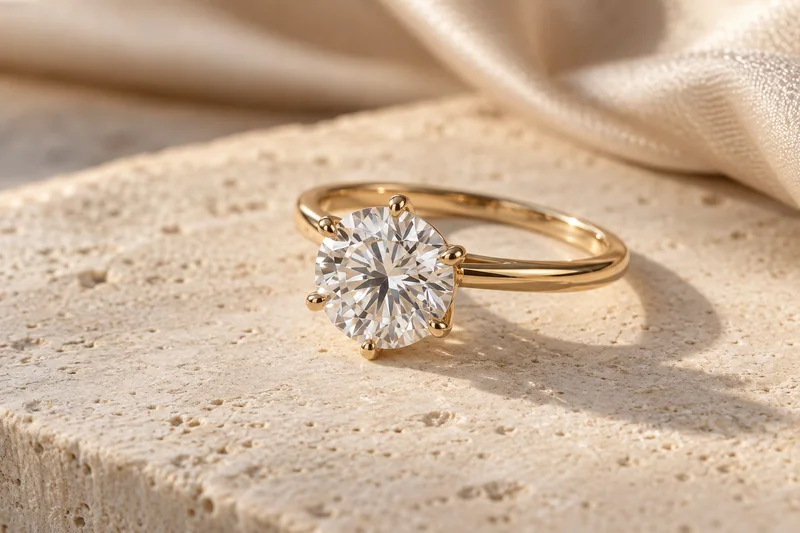
Choose the light you love.
Look at the stone in different lighting. Strong fire may be part of the attraction, or you may prefer a quieter look. Shape, cut and setting matter.

The gemstone guide
A different kind
of brilliance.
Moissanite has a look of its own.
Enjoy its colorful flashes every day.

01 / A gemstone in its own right
Moissanite is crystalline silicon carbide. The moissanite used in modern jewelry is laboratory-created. It is distinct from both natural and lab-grown diamond.
Its appeal is its own: distinctive flashes of color, strong scratch resistance, and the freedom to choose the ring you love.
Natural moissanite is rare. Gem-quality laboratory-created moissanite entered the jewelry market in the late 1990s. Sources

02 / More than sparkle
These words describe different things. Explore what you are actually seeing.
Often called brilliance, brightness describes reflected white light. Cut and lighting help shape how bright a gemstone looks.
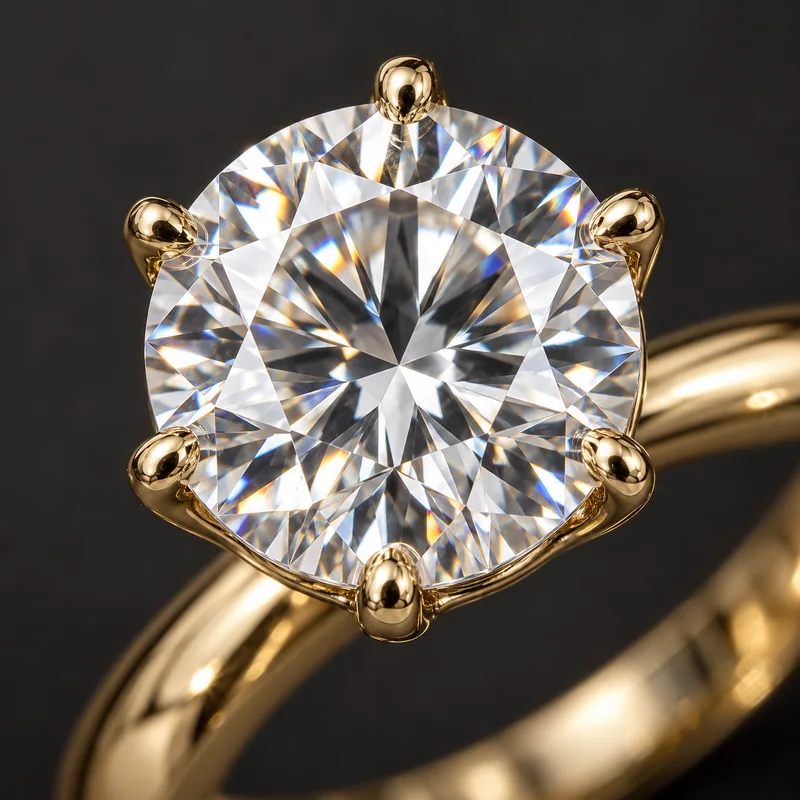
Fire is the rainbow-colored light produced by dispersion. Moissanite has higher dispersion than diamond; its colored flashes can be especially noticeable.
Scintillation is the changing pattern of sparkle as the stone, light or viewer moves. Still photographs cannot tell the whole story.
More fire does not mean every stone looks brighter. Choose the look you prefer.
03 / An honest comparison
Moissanite and diamond can look similar. Their materials and optical properties differ.
| At a glance | Moissanite | Diamond |
|---|---|---|
| Material | Silicon carbide | Carbon |
| Jewelry origin | Laboratory-created | Natural or laboratory-grown |
| Mohs hardnessScratch resistance | 9.25 | 10 |
| Refractive index | 2.648–2.691 | 2.42 |
| DispersionRelated to fire | 0.104 | 0.044 |
| What to expect | Distinctive colorful flashes | A different balance of white light and fire |
These GIA reference values are not measurements of individual Forever Moissanite stones. Hardness is not impact resistance; refractive index and dispersion are not a beauty score.
Explore the GIA researchWhich one would I
choose to wear?

04 / The everyday chapter
At 9.25 on the Mohs scale, moissanite offers strong resistance to scratching. That makes it a practical consideration for a ring you plan to wear often.
Durable does not mean indestructible. The stone, prongs and setting still deserve care.
Remove your ring before heavy work or activities that could strike the stone or setting.
Warm soapy water is a gentle starting point. Ask a jeweler about cleaning the complete piece, especially if it includes other gems.
Have loose prongs or a moving stone checked before wearing the ring again.
A considered choice
A beautiful ring should feel right and suit your needs.
Ask us about a ringLook at the stone in different lighting. Strong fire may be part of the attraction, or you may prefer a quieter look. Shape, cut and setting matter.

Check the dimensions, metal, color and clarity information for the piece. Do not assume that every moissanite has the same grade, or that a grade is a GIA diamond report.
Compare the final price, setting, fit and care. A savings claim alone does not tell the whole story. Ask about the specific certificate, warranty and return terms before ordering.
Your forever, thoughtfully chosen
Explore Forever Moissanite designs, ask a question about a particular piece, or begin a custom design conversation.
Our lifetime warranty covers manufacturing defects, subject to its terms and exclusions.
Read the warrantyA little clarity
Still deciding? We are here to help you understand the piece you are considering.
No. Moissanite is silicon carbide; diamond is carbon. Laboratory-grown diamond is diamond, while laboratory-created moissanite is a different gemstone.
Yes. Their optical properties differ. Some thermal testers can respond to moissanite as if it were diamond, so one tester result is not conclusive identification. A qualified gemologist can assess the stone.
No. Color and clarity vary by stone. Check the specifications for the piece you are considering, and ask what any included certificate covers.
No. Laboratory origin describes how the gemstone is produced. Environmental and social claims about a finished ring require evidence about its materials and production.
There is no reliable percentage that applies to every ring. Compare the actual prices, stone sizes, metals and settings of the pieces you are considering.
This guide distinguishes established gemstone properties from personal preferences. The editorial images are AI-generated illustrations. They are not photographs of specific inventory and do not demonstrate optical performance.
A different kind of brilliance. Your kind of forever.